
What the percentage means
The number is VLT, visible light transmission, which is how much visible light gets through. A 70% film lets through 70% of the light and looks very light. A 5% film lets through 5%, which is limo dark. On a car, the number that matters legally is film plus glass, and factory glass is never 100% clear.
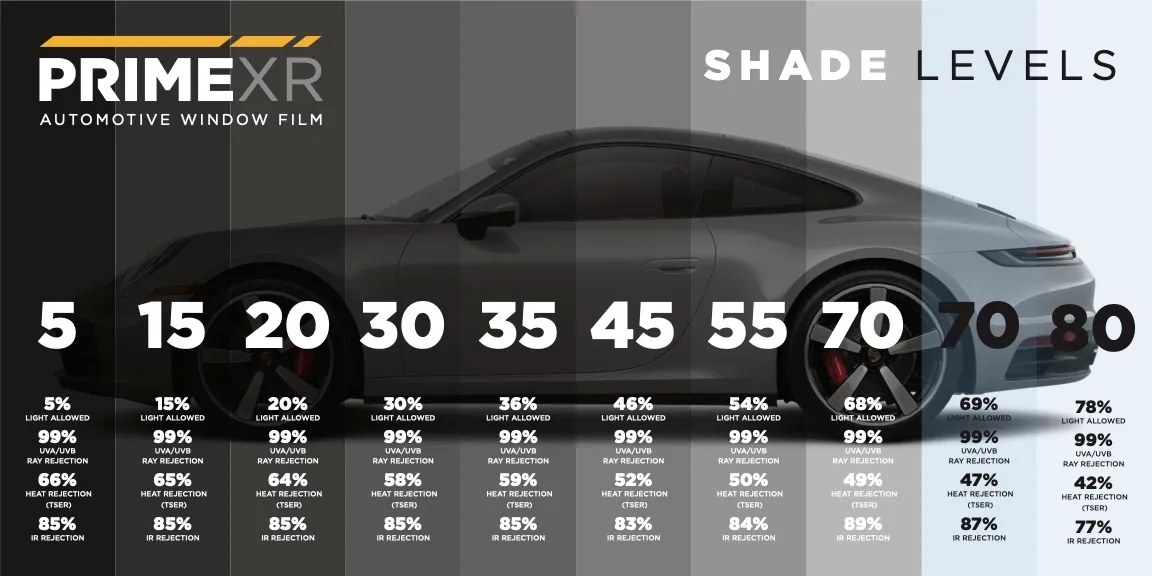
Common shades at a glance
| VLT | Looks | Best for |
|---|---|---|
| 70% | Nearly clear | NY-legal front sides and full windshield (as clear ceramic). Rejects heat and leaves the look alone. |
| 50% | Light | Subtle shade and glare reduction. Rear sides of SUVs and trucks. |
| 35% | Medium | The classic tinted look. Rear sides of SUVs and trucks, and the rear window with dual mirrors. |
| 20% | Dark | Privacy, and close to most factory SUV privacy glass. |
| 5% | Limo | Maximum privacy. NY: SUV, van and truck rear windows only (or with a medical exemption). |
How ceramic film handles heat
Most of the heat you feel through glass is infrared, which you can't see. Old dyed films cut heat by blocking visible light, so the only way to get cooler was to go darker. Nano-ceramic films like XPEL PRIME XR PLUS go after infrared directly and reject up to 96% of IR heat, even in light shades. All XPEL PRIME films block over 99% of UV.
Why it looks darker from outside
When you look at a tinted car from outside, the light has to pass through the film twice. It goes in to the cabin and then back out to your eyes, so the interior looks darker than the number suggests. A 35% film looks much darker from the street than it feels from the driver's seat.
Try them on your own car
Seeing it is the fastest way to choose. Upload a photo of your car to our tint simulator and try every shade. It shows whether each window is legal in New York.